
- 세상의 모든 계산기 수학, 과학, 공학 이야기 수학 ()
삼각함수의 (각)변환 이해
-

- 2016.11.09 - 16:31 2016.01.10 - 12:28 8293 3
1. 삼각함수의 변환이 가능한 이유
삼각함수의 (각)변환이라고 하면 θ에 일정 각도를 더하면, cos ↔ sin 이 되거나 앞에 부호가 바뀌거나 하는 것을 말하는데, 그것은 삼각함수가 일정한 패턴을 가진 주기함수이기 때문에 가능한 것이다.
이해하지 못하면 외울 수밖에 없는데, 이해하면 외울 필요는 없다. 물론 이해도 하고 외우기도 하면 더 좋다.
2. 우함수와 기함수
우함수와 기함수가 무엇인지는 검색해서 찾아보시고...
수학에서 짝함수(영어: even function)와 홀함수(영어: odd function)는 특별한 대칭 관계를 만족하는 함수들이다. 해석학에서 자주 사용하며, 특히 멱급수나 푸리에 급수에서 중요하게 사용한다. 짝함수는 우함수(偶函數)라고도 하며, 홀함수는 기함수(奇函數)라고도 한다.
- cos(-x)=cos(x) : 우함수
- sin(-x)=-sin(x) : 기함수
https://ko.wikipedia.org/wiki/%ED%99%80%ED%95%A8%EC%88%98%EC%99%80_%EC%A7%9D%ED%95%A8%EC%88%98
3. cos 의 각변환
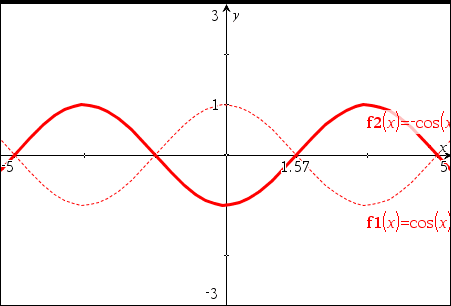
- cos(x) 함수는 우함수
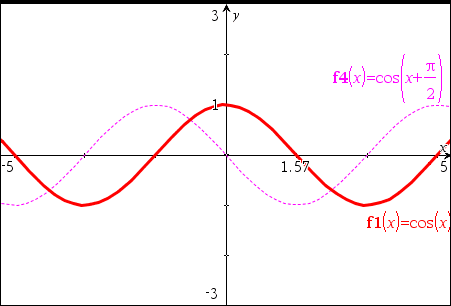
- cos(x) 보다 ½*π 만큼 빠른 함수인 cos(x+π/2) 는 현재(x=0)을 기준으로 과거(음수방향)으로 이미 지나감
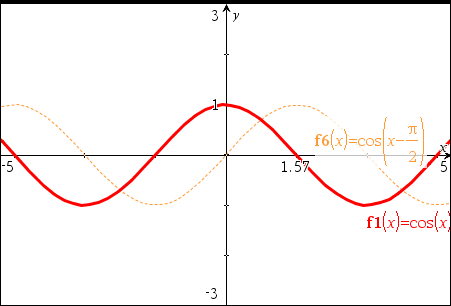
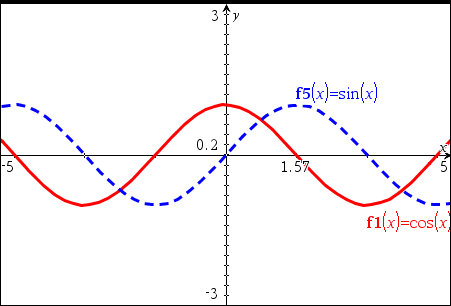
- 반대로 cos(x) 보다 π/2 만큼 느린 함수인 cos(x-π/2) 는 현재(x=0)을 기준으로 아직 미래방향(양수방향)에서 도착하지 않았음
- 그런데 그것은 sin(x) 와 동일한 모양
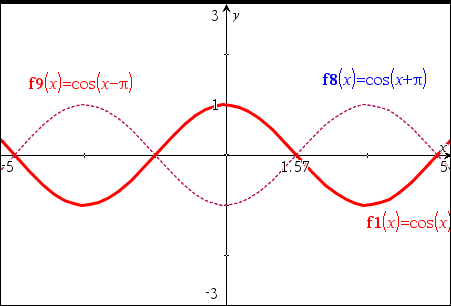
- 현재를 기준으로 pi만큼 빠르거나 느린 함수는 모양이 같음. (1주기의 차이 발생)
위의 내용을 정리하면 삼각함수의 변환공식
| 식 | 변환 | 식 | 변환 | 식 | 변환 | |
| 보각공식 | sin(-θ) | -sinθ | cos(-θ) | cosθ | tan(-θ) | -tanθ |
| 주기공식 | sin(θ+2nπ) | sinθ | cos(θ+2nπ) | cosθ | tan(θ+nπ) | tanθ |
| 보각공식 | sin(θ+π) | -sinθ | cos(π+θ) | -cosθ | tan(θ+π) | tanθ |
| sin(-θ+π) = sin(-(θ-π)) = -sin(θ-π) |
sinθ | cos(-θ+π) | -cosθ | tan(-θ+π) | -tanθ | |
| 반각공식 | sin(θ+π/2) | cosθ | cos(θ+π/2) | -sinθ | tan(θ+π/2) | -cotθ |
| sin(-θ+π/2) | cosθ | cos(-θ+π/2) = cos(-(θ-π/2)) = cos((θ-π/2)) |
sinθ | tan(-θ+π/2) | cotθ |
-
25
댓글3
-
세상의모든계산기
예를 들어서... cos(-θ+π/2) 를 살펴보면
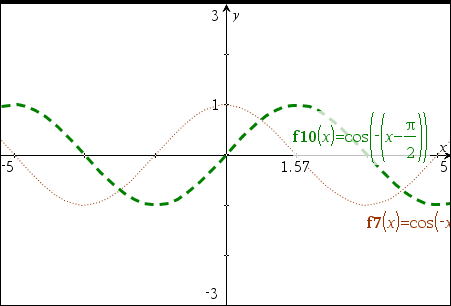
- cos(θ) 를 상상해보고
- cos(-θ) 를 상상해 보고, x축 뒤집으면 되죠?)
- 거기서 π/2만큼 느린 것을 그리면 cos(-(θ-π/2)) 원하는 그래프
느린 것 = 아직 오지 않은 미래 = +방향 - 그것이 ±cos(θ), ±sin(θ) 중에서 무엇과 같은가를 상상
※ 2번 3번의 순서를 바꿔도 무방. 부호/괄호 조심.
세상의모든계산기 님의 최근 댓글
본문의 변환 위젯에 사용된 전서체 폰트는 대만의 최고 학술 연구 기관인 중앙연구원(Academia Sinica)에서 제공하는 ‘숭희전체(崇羲篆體)’로 전통 한자 서체인 소전(小篆)을 현대 컴퓨터 폰트(글꼴)로 구축한 오픈소스 프로젝트로 개발되었습니다. https://xiaoxue.iis.sinica.edu.tw/chongxi/download.htm 2026 10.20 예제1) 예제2) 예제3) 추가옵션 2026 10.18 PC 소프트웨어에서 script Editor 로 소스코드를 쉽게 복사 -> AI에게 문의/개선요청 할 수 있습니다. 잘 되거나, 잘 안되는 부분이 있으면 대댓글 남겨주세요. 2026 10.16 AI로 딸깍하니까, lua 프로그램으로 바꿔주네요. 세상 참... 본문의 ti-basic 기반으로 만들었고, 서로 문제를 일으킬 수 있을 듯 하여 별개의 파일로 작성하였습니다. 1.1 Page : 설명 1.2 Page : 그래프 1.3 Page : Calculator 사용법 Root Locus 1+K*N/D=0 EX: (6s^2+5s+2)/(6s^3(s^2+7s+16)) INPUT (Calculator page 1.3 ): rl_num:={6,5,2} rl_den:={6,42,96,0,0,0} or num(6s^2+5s+2) den(6s^3(s^2+7s+16)) optional: rl_T:=10 rl_D:=1 Coeffs are descending powers of s. Back on graph page it refreshes itself, else press [r] or [enter]. KEYS: [+] [-] Kmax zoom, [0] reset, [r] reload MARKS: x=pole, o=zero, red line=real axis, gray dash=asymptote, box=break pt, diamond=j-cross VARS: rl_Kmax rl_sigma rl_r rl_JK rl_Jw 첨부파일 rlocus_lua.tns 2026 10.16 링크가 깨졌다고 하시니 404 에러가 나는 아래 링크를 말씀하시는 것 같은데 https://digilander.libero.it/fpirozzi/fourier.zip 이것은 TI-89 / TI-92 용 파일이며 [TI-92][TI-89] Fourier Transform Library https://allcalc.org/52455 링크의 Attached files + 안에 있습니다. 2026 09.11